Assisted Stretching Service Guide
Overview
Objectives
Stretch therapy is rapidly growing and becoming a popular segment within the wellness industry. As people become more aware of the importance of flexibility and mobility for overall health, demand for assisted stretching has surged.
The service appeals to a wide range of customers, including athletes looking to improve performance, older adults seeking mobility support, and individuals coping with stress-related muscle tension. Relatively easy setup of and a clear focus on individual needs, making assisted stretching a popular and accessible option across various demographics.
Why Offer Assisted Stretching
Benefit to Franchise Partners:
- Student pipeline - attract students to MA clinics – future Practitioners
- Low-cost outlay for infrastructure, equipment and training
- Strengthen real estate utilization
- Assisted stretching generates revenue with healthy margins by leveraging existing clinic space, minimal equipment, and a predictable, repeatable service model.
Benefits to Clients:
- More therapeutic treatment options under the MA umbrella to help our clients with their conditions & symptoms.
- A cost-effective therapeutic treatment option
Benefits to Students:
- Support their academic expenses
- Practice weeknight & weekends around school hours (when we have treatment rooms available)
- Gain experience in a clinical environment where they can gain a comfort level practicing with/caring for clients
- Promote great success with OSCE (comfort level dealing with clients)
- Regulatory Requirements aside - Massage Therapy and Chiro students are well suited for this role due to their education in anatomy/physiology.
What is Assisted Stretching
Assisted stretching is a type of stretching exercise where an individual is helped by a partner, therapist, or trainer to perform stretches. The main goal of assisted stretching is to improve flexibility, range of motion, and muscle relaxation. The Stretch Coach provides external force to help the person go deeper into a stretch, often beyond what they could achieve on their own.
There are different types of assisted stretching, including:
- Passive Stretching: The partner moves the person's limb or body into a stretched position and holds it there, allowing the person to relax into the stretch.
- Proprioceptive Neuromuscular Facilitation (PNF) Stretching: This involves both stretching and contracting the muscles. The partner helps stretch the muscle, and then the individual contracts it, followed by another deeper stretch.
- Dynamic Assisted Stretching: The partner helps the individual perform controlled, active movements to improve flexibility and mobility.
Assisted Stretch Coach
Scope of Practice
Definition of Role
An Assisted Stretch Coach is a trained professional who applies guided stretching techniques to clients in a controlled, safe, and professional environment. These techniques may include static, dynamic, and proprioceptive neuromuscular facilitation (PNF) stretching. The coach works with clients to help improve range of motion, flexibility, and functional movement patterns.
Permitted Activities
Assisted Stretch Coaches may perform the following within their scope of practice:
- Conduct non-diagnostic assessments of flexibility and mobility to guide stretch sessions.
- Develop and implement customized assisted stretching sessions based on client goals and needs.
- Use manual techniques to facilitate passive stretching of muscle groups.
- Apply active stretching techniques that involve client participation.
- Educate clients on proper stretching techniques and self-care between sessions.
- Maintain accurate client records and follow established safety and hygiene protocols.
Limitations and Restrictions
Assisted Stretch coaches must operate within their defined scope and may not:
- Diagnose, treat, or prescribe for any physical or medical condition.
- Perform manipulations or adjustments of joints or the spine.
- Provide massage therapy, physical therapy, or use modalities
- Work with clients experiencing acute injury, pain, or conditions outside the scope of assisted stretching
Training and Competency
Assisted Stretch Coaches must complete our internal certification program in assisted stretching techniques and maintain up-to-date knowledge of best practices recommended by Massage Addict
Ethical and Professional Standards
Assisted Stretch Coaches must:
- Obtain informed consent prior to beginning services.
- Maintain client confidentiality and professional boundaries at all times.
- Refer clients to appropriate healthcare providers when needs exceed their scope or competence.
- Comply with all local, state, and federal regulations, including any applicable licensing laws.
Becoming a Stretch Coach
Assisted stretching is a type of stretching exercise where an individual is helped by a partner, therapist, or trainer to perform stretches. The main goal of assisted stretching is to improve flexibility, range of motion, and muscle relaxation. The Stretch Coach provides external force to help the person go deeper into a stretch, often beyond what they could achieve on their own.
There are different types of assisted stretching, including:
- Passive Stretching: The partner moves the person's limb or body into a stretched position and holds it there, allowing the person to relax into the stretch.
- Proprioceptive Neuromuscular Facilitation (PNF) Stretching: This involves both stretching and contracting the muscles. The partner helps stretch the muscle, and then the individual contracts it, followed by another deeper stretch.
- Dynamic Assisted Stretching: The partner helps the individual perform controlled, active movements to improve flexibility and mobility.
This in-person training component is currently being assessed as part of the pilot phase.
We’ll evaluate its impact on Stretch Coach preparedness and consistency across clinics to determine whether it should become a permanent part of the training pathway.
Recruiting a Stretch Practitioner
1. Entry as Student GSA (if applicable)
Students may be hired as Guest Service Administrators (GSAs) in Year 1 to familiarize themselves with the clinic environment.
In this role, they can observe treatment settings and assist with front-of-house or administrative support duties, helping to prepare them for future clinical interactions.
2. Certification in Assisted Stretching
In Year 2, students will be offered the opportunity to become certified Assisted Stretch Coaches through the Massage Coach training program—at no cost to them.
Training includes biomechanics, safe stretching protocols, communication techniques, and documentation best practices.
3. Employment & Compensation
Students can work flexible shifts as a Stretch Coach providing 1-on-1 assisted stretching sessions with clients.
This role does not involve any form of massage therapy/chiropractic care and remains distinct from their RMT/Chiro training. Instead, students will function as passive stretch therapists, guiding clients through structured, assisted mobility routines.
The Stretch Coach role will be employed as an independent contractor, and they will need to obtain their own insurance through Tripemco.
Onboarding a Stretch Practitioner
Introduction to the Clinic
When onboarding a Stretch Coach to our clinics, our objective is to make them feel comfortable. We want to provide them with the background on the clinic, the brand, and give them confidence to ensure that they are excited to be a part of the team and organizational growth. It is important that each Stretch Coach who joins your team, understands the business model, the expectations, and the onboarding process.
Introduction
When meeting with your Stretch Coach for the first time, it is important to provide them with an overview of the Massage Addict way. This means, providing the following:
Clinic Tour
Walk the Stretch Coach through the clinic to provide them with the understanding of where everything is, and to get them familiar with the operational clinic flow.
MA History
Any new team member who joins our organization, should be provided with an overview of when and how Massage Addict started, and the success we have had thus far. Please make sure to share with the Stretch Coach, that Massage Addict is a therapeutic brand with a focus on clinical treatments in a warm and comfortable atmosphere for both clients and team members.
Meet the team
The culture of the clinic depends on the expectations you set, be sure to have your Stretch Coach meet each member of the team so that they feel welcomed and so that they can see why you thought they would be a perfect addition to the team. Allow for complimentary treatments between practitioners and staff to ensure in-clinic referrals develop. Ensure your other health care practitioners understand what conditions assisted stretch can treat so as to promote cross referrals & collaboration in your clinic. It is a good idea to have a meeting or pizza lunch where the Stretch Coach can discuss their scope of practice and how they can collaborate together as health care professionals.
Orientation
It is important to provide the Stretch Coach with a copy of the orientation guide before meeting with them. This allows time for them to read through the guide independently and gather thoughts/questions they may have. Once the Stretch Coach comes in to meet with you, it is important to go through the guide together, to set expectations and answer any outstanding questions.
New Hire Tasks
The below outlines the new hire documents that need to be collected and/or provided.
|
Professional Agreement |
Acknowledgement of Legislative policies |
|
Schedule A |
Benefit package (if applicable) |
|
Banking form |
Uniform |
|
Void cheque |
Sample invoice |
|
Sample consent to release medical records |
Sample consent to release medical records |
|
Biography form for the website |
Payroll Schedule |
|
Booker Login |
Juvonno Login |
Proof of Insurance: Once the Stretch Coach has completed their training, they will need to secure Liability Insurance from Tripemco, and provide proof of insurance to begin treating in a clinic.
The First Visit Client Journey
- The client will book online, by phone or in-person
- The client will fill out their Intake Form through Juvonno
- When the client arrives for their appointment the Stretch Coach will go over their intake form with them for accuracy
- Client given informed consent for treatment to proceed
- Stretch Coach will ask client to complete 3 consecutive squats
- A Range of Motion assessment will be performed
- Once Range of Motion is assessed, the client gets on the table and the Stretch Coach take them through a stretching sequence
- Near the end of the treatment, the Stretch Coach will offer information on the clients recommended treatment plan and fills out the treatment plan pad
- Once the client feels like they have had a chance to ask any questions they may have about the treatment plan the Stretch coach will walk the client to reception
- The Front Desk will rebook based on the treatment plan
Treatments
Initial Visit
- Stretch Coach goes over intake form for accuracy
- Discussion about goals and areas of concern
- Discussion about tension scale
- Discussion about flow (stretch from trunk to extremities)
- Informed consent is given
- Stretch Coach completes Range of Motion assessment to look for areas of concern
- Clients gets on table
- Stretch Coach explains each stretch before starting
- ROM performed before each stretch
- Warm up muscle before each stretch
- Gentle joint traction, shaking or rhythmic mobilizations
- Go through a sequence of stretches
- Leave a few minutes at the end of treatment to explain:
- Findings
- Expectations post treatment
- Recommendations of home care
- Referral within clinic
- Looking for changes = Chiro/Massage
- Looking for relaxation = continue with stretching and or massage
- Stretch Coach fills out treatment plan pads
- May include other services
- May include the cadence of treatments
- Stretch Coach walks clients to GSA and gives treatment plans for future booking
- Front Desk talks to clients about series (if applicable) and books future appointments
Follow Up Visits
- Stretch Coach asks if there are any changes to the intake form
- Discussion about goals and areas of concern
- Informed consent is given
- Clients gets on table
- Stretch Coach explains each stretch before starting
- ROM performed before each stretch
- Warm up muscle before each stretch
- Gentle joint traction, shaking or rhythmic mobilizations
- Go through a sequence of stretches
- Leave a few minutes at the end of treatment to explain:
- Findings
- Expectations post treatment
- Recommendations for home care
- Referral within clinic
- Looking for changes = Chiro/Massage
- Looking for relaxation = continue with stretching and or massage
- Stretch Coach fills out treatment plan pads
- May include other services
- May include the cadence of treatments
- Stretch Coach walks clients to reception and gives treatment plans for future bookings.
- Front Desk talks to clients about series (if applicable) and books future appointments
Treatment Room Setup
Equipment
Treatment Tables
Stretch Coaches are typically comfortable treating using a massage table if the table is hydraulic. It is important that the table used can be raised and lowered in height and fully adjusted.
- No table linens needed
- Bolster
- Large towel/Pillowcase for neck traction/stretch assistance
Treatment Room Setup
The treatment room setup remains the same as our current setup. However, the table preparation is different for a treatment in that there is nothing on it.
- The table will not have any linen.
- The table will not have a blanket.
- The table will not have a table warmer or require a thermophore.
All supplies should be acquired though Vitality Depot.
Booker
Codes & Pricing
Booker Codes
*Initial 60 Min Assisted Stretch Treatment - $80.00
*Initial 30 Min Assisted Stretch Treatment - $50.00
*60 Min Assisted Stretch Treatment - $80.00
*30 Min Assisted Stretch Treatment - $50.00
Member discounts
- 6-month
- 12-month
Series
- 5 pack
- 10 Pack
Adding a Stretch Practitioner
Please reference Booker Guide - Adding New Employees Contractors 01.20.pdf for the steps on how to add a practitioner to Booker.
Scheduling an Assisted Stretch Session
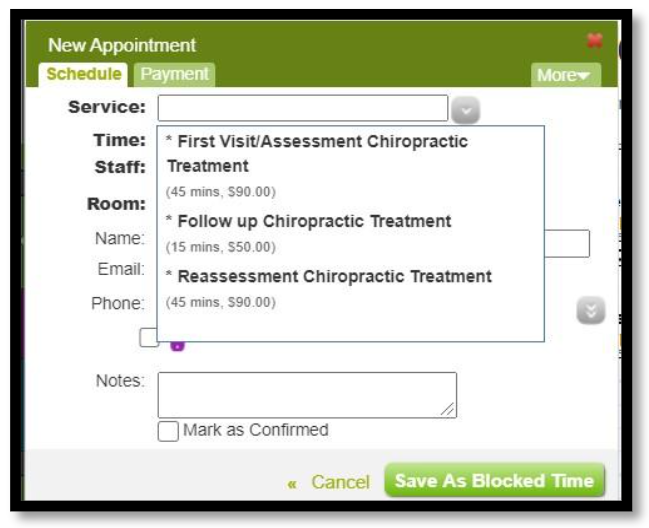
When it comes time to booking a session in Booker, you will find the Assisted Stretch codes within the Wellness and Integrated Services category in the pop-up field.
Below is an example of what you or your GSAs will see when booking an appointment in Booker.
Below is an example of what client’s will see on our website when they are looking to book a treatment:
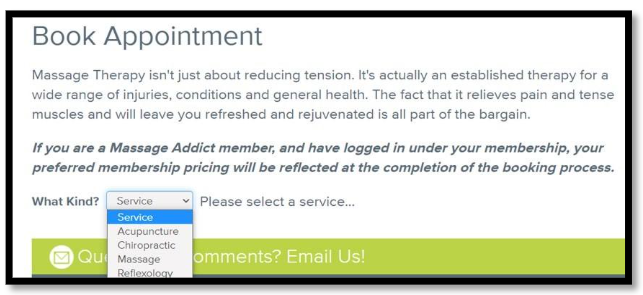
Because there are no 15-minute manual blocks inputted into the schedule and the treatment times vary, the website limits the number of appointments listed when a client goes to book.
Below is an example of what the schedule will look like in Booker, on the calendar:
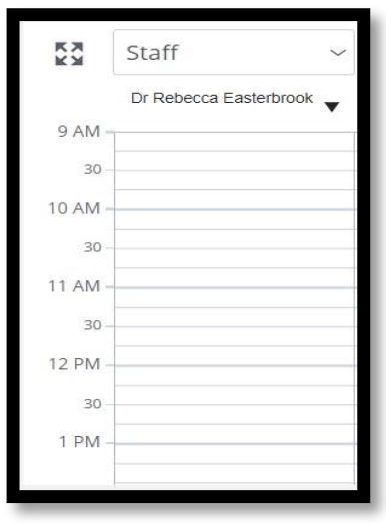
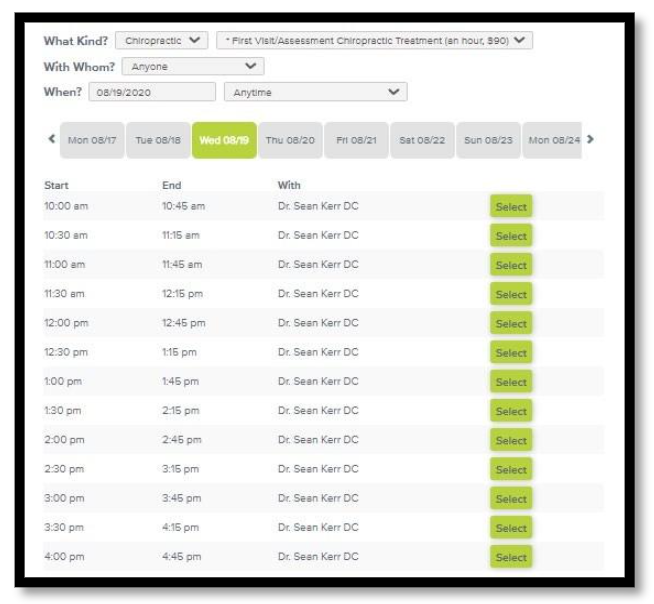
The website will only show the first available appointment every half an hour. This change has been made to:
- Limit the time slots that display online so that it is not overwhelming to the client.
- Continue to provide flexibility to our clients with times that they prefer and that accommodate them.
Below is an example of what the website display when a client selects a 60-minute session.
Juvonno
Client Intake
The client will fill out the Assisted Stretch Intake Form and the SC will fill out the Assisted Stretch Session Notes. All sessions will use these session notes
Marketing
Evergreen info like posters, business cards, uniforms, social media recommendations